


Before writing a quote to a potential customer, our team generally performs a site visit to determine exactly what solutions are most needed and where necessary equipment would be installed.
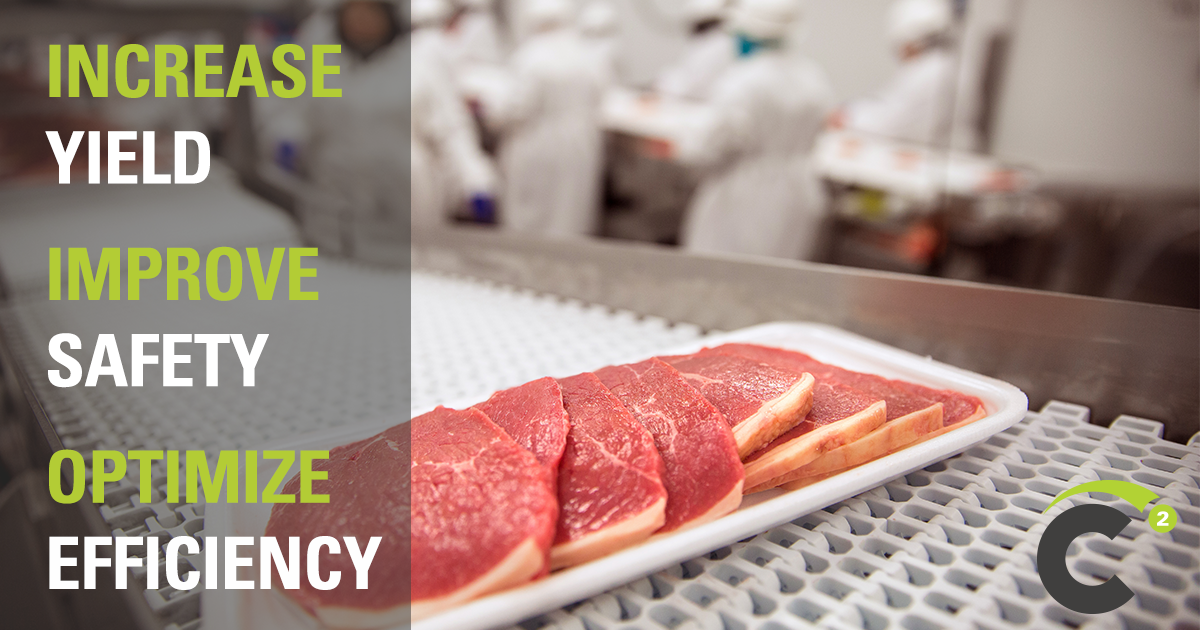
During a recent visit to a meat packing plant, our team noticed several key areas where process changes could increase yield, improve safety, and make processes more efficient.
PROCESS RECOMMENDATION: Go Paperless
There were many stations where employees were recording data on paper. For example: At the fat analyzer station, one employee recorded information on paper, then walked the piece of paper to another employee who entered the data into a computer. We could install a touch screen at that station where one employee can enter data directly into the database to be analyzed in real-time.
Another touchscreen could be installed in the wet area where the QC performed carcass inspections. With our FSQM module, we can load the touchscreens with all USDA inspection criteria so the tech can quickly and efficiently enter inspection data from the plant floor.
SAFETY IMPROVEMENTS: Install probes and monitors
TEMP ISSUE –The plant had experienced issues where carcasses in the chilling system were not reaching temperatures required by the USDA. This required the carcasses to be rerun, slowing production. With our solution, we would mount wireless probes into random carcasses. The carcasses would then travel through blast chillers and hang in coolers for 24 hours; temperatures would be monitored in real-time. This method can detect hot spots to be analyzed and eliminated. This will also give real-time data monitoring the actual chilling time of the carcasses.
METAL DETECTION – Management expressed a need to verify downtime for their metal detector. Our system can monitor downtime for any unit in the plant. Through our Executive Dashboard, management can view a real-time report showing which systems are up or down within their plant. In the case of the metal detector, we can monitor both the metal detector and the conveyor belt running meat through the detector. If an employee turns on the conveyor belt while the metal detector is inactive, an alarm will sound and a notice can be sent to management if desired.
YIELD IMPROVEMENTS: Track Real-Time Improvements on Plant-Floor Scoreboards
INCREASED YIELD – On the processing lines, the workers start out with large primal cuts of meat. Workers retain good meat and discard trimmings. With the installation of our system, we can add increases in yield of up to two percent.
We then install plant-floor scoreboards to provide real-time feedback to workers, tracking their yield improvements. Real-time performance can be displayed according to production lines and ranked, creating incentives to improve efficiency in friendly competition.
Based on a 2-percent increase in annual pounds of acceptable meat vs. trim, the system quickly pays for itself as well as all other solutions offered in this single plant survey.
SCHEDULE A SITE SURVEY: TellMeMore@catsquared.com